What to Do If the Driver Who Hit You Has No Insurance in Oklahoma
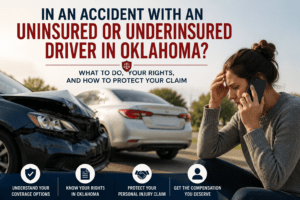
A serious crash is stressful enough. It becomes even more frustrating when you learn that the driver who caused it has no insurance, not enough insurance, or left the scene before you could identify them. Many Oklahoma drivers assume that an uninsured driver means there is no way to recover compensation. That is not always true. Depending on the facts, your own auto policy, the other driver’s assets, the crash report, and the available evidence may still give you a path forward.
BDIW Law helps injured people throughout Oklahoma understand those options after life-changing collisions. If you were hurt by an uninsured or underinsured motorist, an experienced Oklahoma car accident lawyer can review the available coverage, protect your claim from insurance mistakes, and help you pursue every source of compensation available.
Why uninsured and underinsured driver cases are different
Oklahoma requires minimum liability coverage, but minimum coverage is often far below the real cost of a serious injury. The Oklahoma Insurance Department explains that the state minimum liability limits are commonly described as 25/50/25, meaning up to $25,000 for bodily injury to one person, up to $50,000 for bodily injury to all people in one accident, and up to $25,000 for property damage. You can review the state’s explanation in its Oklahoma auto insurance and accident guide.
Those numbers may sound significant until a crash victim needs emergency care, imaging, surgery, therapy, time away from work, and long-term pain management. A hospital bill alone can exceed the at-fault driver’s policy limits. If the driver has no valid policy, no license, a lapsed policy, or no reachable assets, the claim becomes more complicated quickly.
Our Team Is Here To Assist You Every Step Of The Way.
SPEAK TO AN ATTORNEY TODAYStep one: protect the crash record
Call law enforcement, request medical help, and make sure the collision is documented. Even if the other driver promises to pay you directly, do not rely on a handshake agreement after an injury crash. A police report can help identify the parties, vehicles, insurance status, witnesses, roadway conditions, and statements made at the scene. It may also help your own insurer evaluate uninsured motorist or underinsured motorist coverage.
Take photos and videos if you can do so safely. Capture vehicle damage, license plates, skid marks, traffic signals, debris, weather, visible injuries, and the surrounding roadway. If a business, home, dash camera, or traffic camera may have recorded the collision, write down the location immediately. Video can disappear within days.
Step two: get medical treatment and follow through
Insurance companies often argue that a delay in treatment means the injuries were not serious or were not caused by the crash. That argument can be unfair, especially when adrenaline masks pain at the scene, but it is still commonly used. Get evaluated as soon as possible and follow the treatment plan. Keep appointments, referrals, prescriptions, restrictions, and therapy records organized.
Do not minimize symptoms to sound tough. Tell medical providers about neck pain, back pain, headaches, dizziness, numbness, weakness, sleep problems, emotional distress, and any limitations that affect work or daily life. Accurate medical records can become some of the strongest evidence in an uninsured driver claim.
Step three: review your own insurance policy
Your own policy may include uninsured motorist coverage, underinsured motorist coverage, medical payments coverage, collision coverage, or other benefits. These coverages can apply in different ways. Uninsured motorist coverage may help when the at-fault driver has no insurance. Underinsured motorist coverage may help when the driver has insurance, but not enough to cover the full loss. Medical payments coverage may help with medical bills regardless of fault, depending on the policy.
Do not assume your insurance company is automatically on your side just because you paid the premiums. Once you make a claim for UM or UIM benefits, your own insurer may evaluate the claim like an opposing insurance company. It may question fault, dispute the severity of your injuries, argue that your bills are excessive, or push for an early settlement before the full medical picture is known.
How fault affects an uninsured driver claim in Oklahoma
Oklahoma uses a comparative negligence rule. Under Oklahoma’s comparative negligence statute, an injured person’s own negligence does not automatically bar recovery unless that negligence is greater than the negligence of the person or parties causing the damage. In practical terms, fault disputes can reduce or defeat a claim if they are not handled carefully.
This matters in uninsured driver cases because the insurer may still argue that you were partly or mostly at fault. Examples include intersection crashes, sudden lane changes, rear-end collisions with disputed stopping distances, left-turn accidents, and crashes involving bad weather. Evidence gathered early can help prevent a blame-shifting defense from controlling the case.
Do not give a recorded statement without guidance
After a crash, you may receive calls from an insurance adjuster requesting a recorded statement. The adjuster may sound helpful, but small wording mistakes can create problems. Saying “I’m fine” before symptoms fully develop, guessing at speed, apologizing, or agreeing with a partial version of events can be used later to weaken the claim.
Before giving a statement, signing medical authorizations, or accepting a settlement, speak with a lawyer who understands Oklahoma injury claims. BDIW can help evaluate whether the request is appropriate and whether the insurer is asking for more information than it needs.
What compensation may be available?
Potential damages may include emergency treatment, follow-up care, future medical needs, lost wages, reduced earning ability, property damage, out-of-pocket expenses, pain and suffering, mental anguish, permanent impairment, and loss of enjoyment of life. The exact value depends on the severity of the injury, the available insurance, the strength of the liability evidence, and the long-term impact on your life.
BDIW Law’s role is to identify every available coverage source, document the true value of the loss, deal with the insurance company, and build the claim as if it may need to be presented in court. That approach can help injured people avoid low settlements and missed coverage opportunities.
Why BDIW Law is a strong choice after an uninsured driver crash
BDIW Law serves injury victims across Oklahoma with offices in Ponca City, Stillwater, Tulsa, and the Oklahoma City area. The firm offers free consultations, 24-hour support, and contingency fee representation, meaning you do not pay attorney fees unless the firm is successful with your claim. For people facing medical bills and time away from work, that structure can make experienced legal help accessible when it matters most.
If you were hit by a driver with no insurance or too little insurance, contact BDIW Law for a free case review. The sooner the firm is involved, the sooner evidence can be preserved, coverage can be reviewed, and the insurance company can be held accountable. Start with the firm’s free Oklahoma injury consultation today.
FAQs About Uninsured Driver Accidents in Oklahoma
Can I still recover money if the at-fault driver had no insurance?
Possibly. Your own uninsured motorist coverage, medical payments coverage, collision coverage, or other sources may help. A lawyer can review the policies and facts.
What if the other driver had insurance but not enough?
You may have an underinsured motorist claim if your damages exceed the at-fault driver’s policy limits and your own policy includes that protection.
Should I use my health insurance after a crash?
Often, yes, because medical treatment should not be delayed. However, health insurers may assert reimbursement rights later, so legal guidance is important.
Is a hit-and-run treated like an uninsured motorist claim?
It may be, depending on your policy and the evidence. Report the crash immediately and preserve all available proof.
When should I call BDIW Law?
As soon as possible after the crash, especially if the driver was uninsured, coverage is disputed, injuries are serious, or an adjuster is requesting a statement.